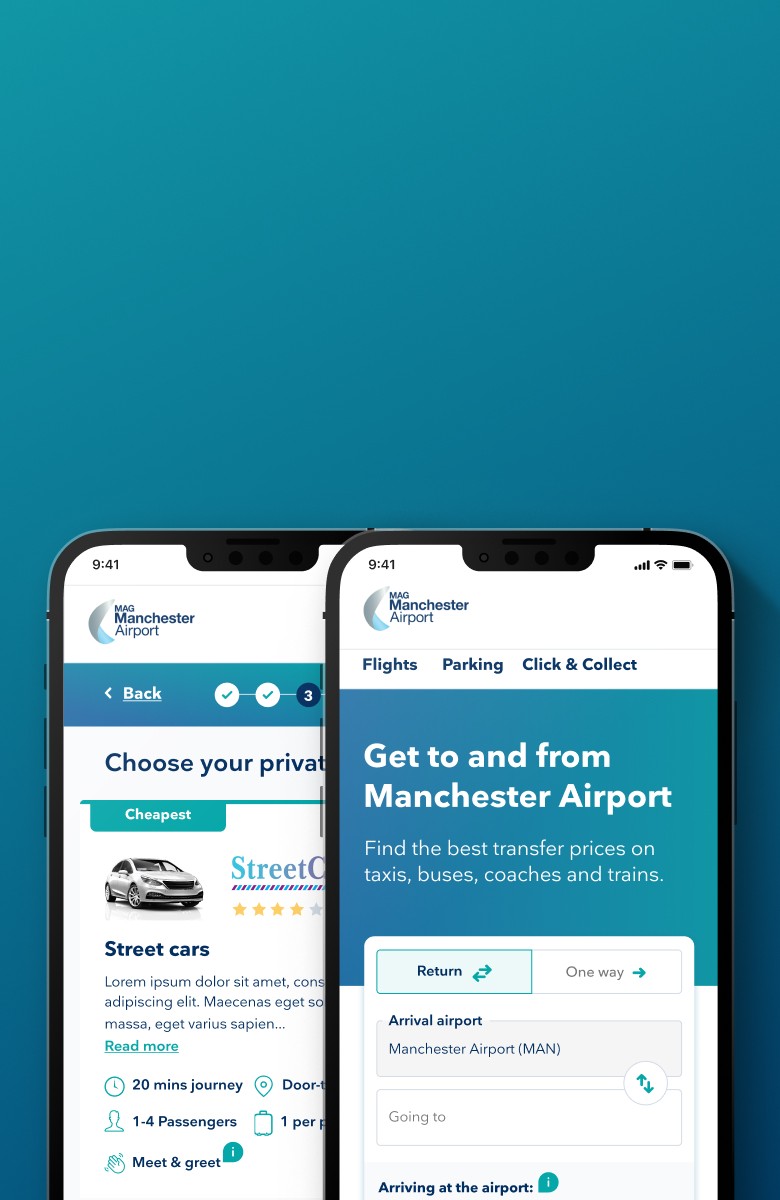
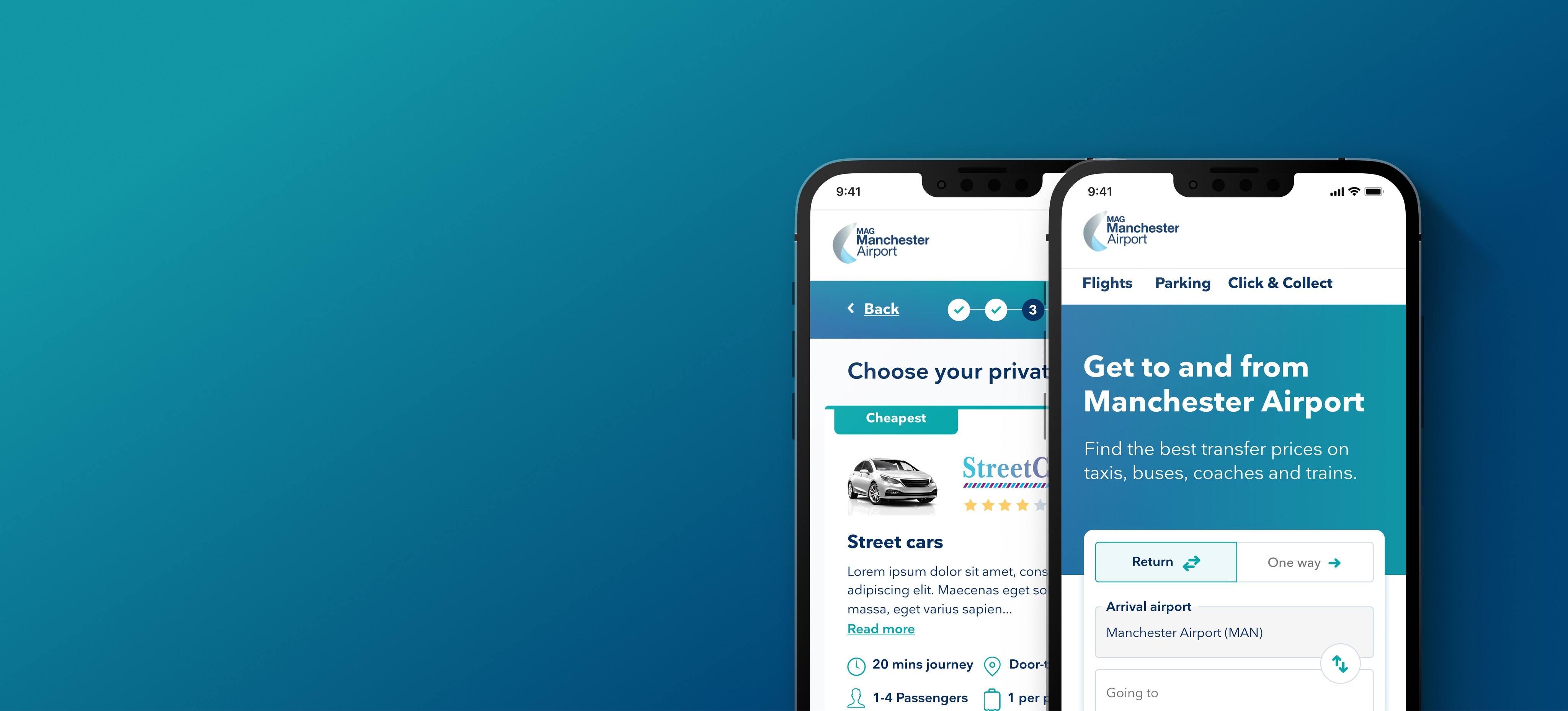
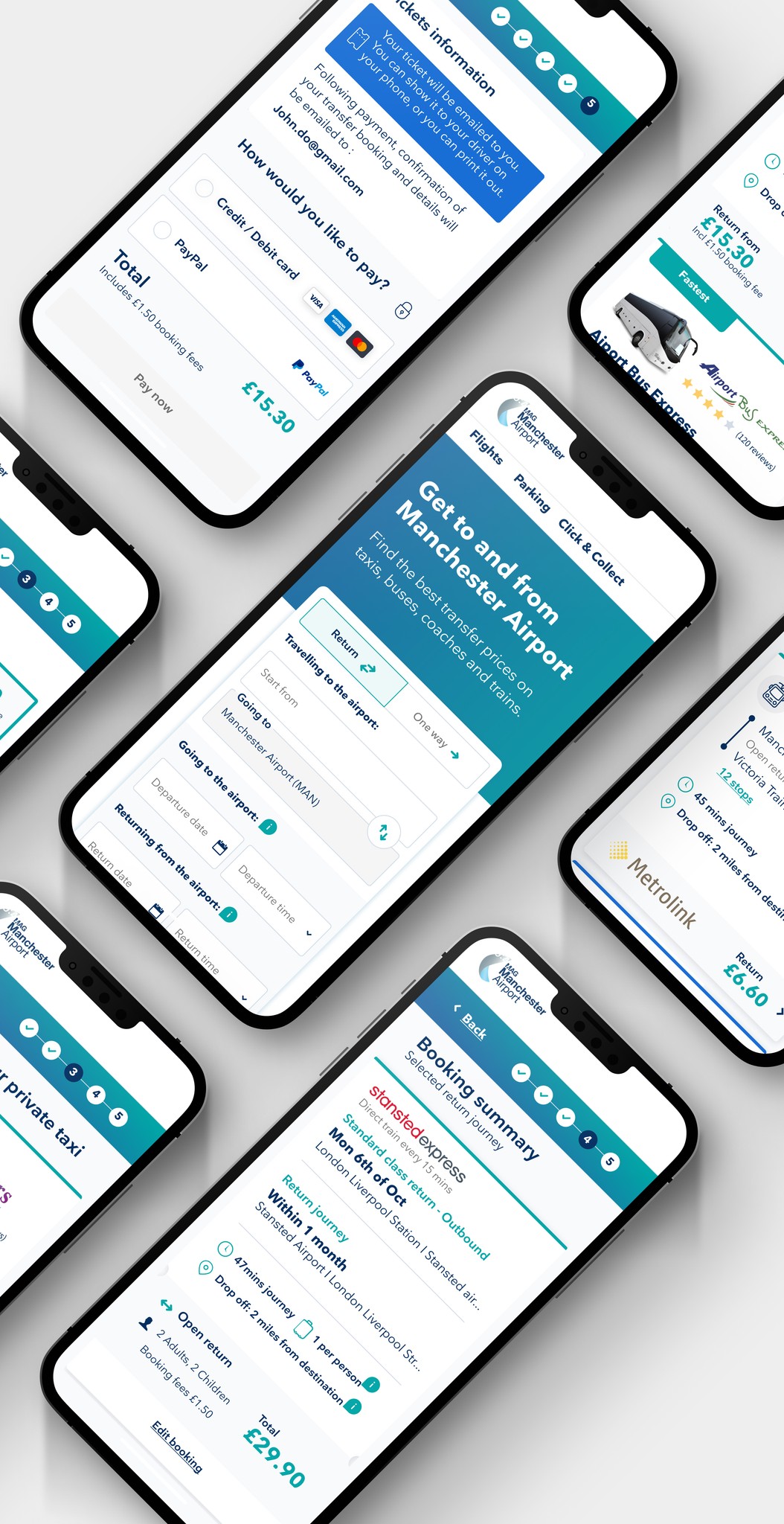
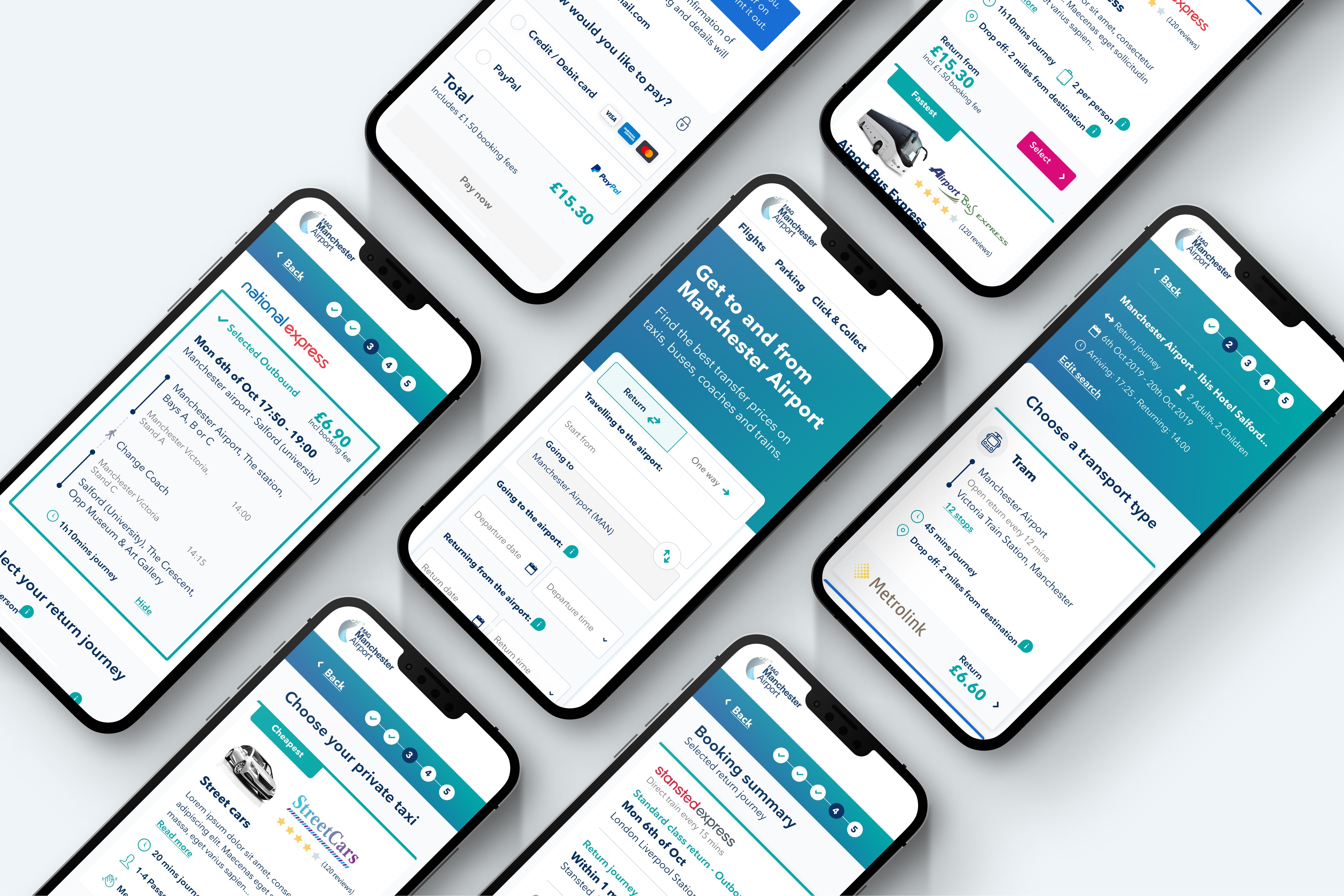
Creating a seamless end-to-end travel experience by evolving the user journey provided by Looking4Transfers, a transfer business recently acquired by MAG-O, and tailoring it to align with Manchester Airport Group’s vision of owning the entire travel journey.
My role
The approach
Our approach started with testing the Looking4Transfer product to uncover usability issues that needed to be addressed. From there, we rapidly prototyped a concept and tested it with users while conducting interviews to gain deeper insights into their needs for travelling to and from the airport. These findings guided the definition of the MVP, which we successfully launched. To ensure ongoing optimisation, we created an A/B testing backlog to continuously improve the product.
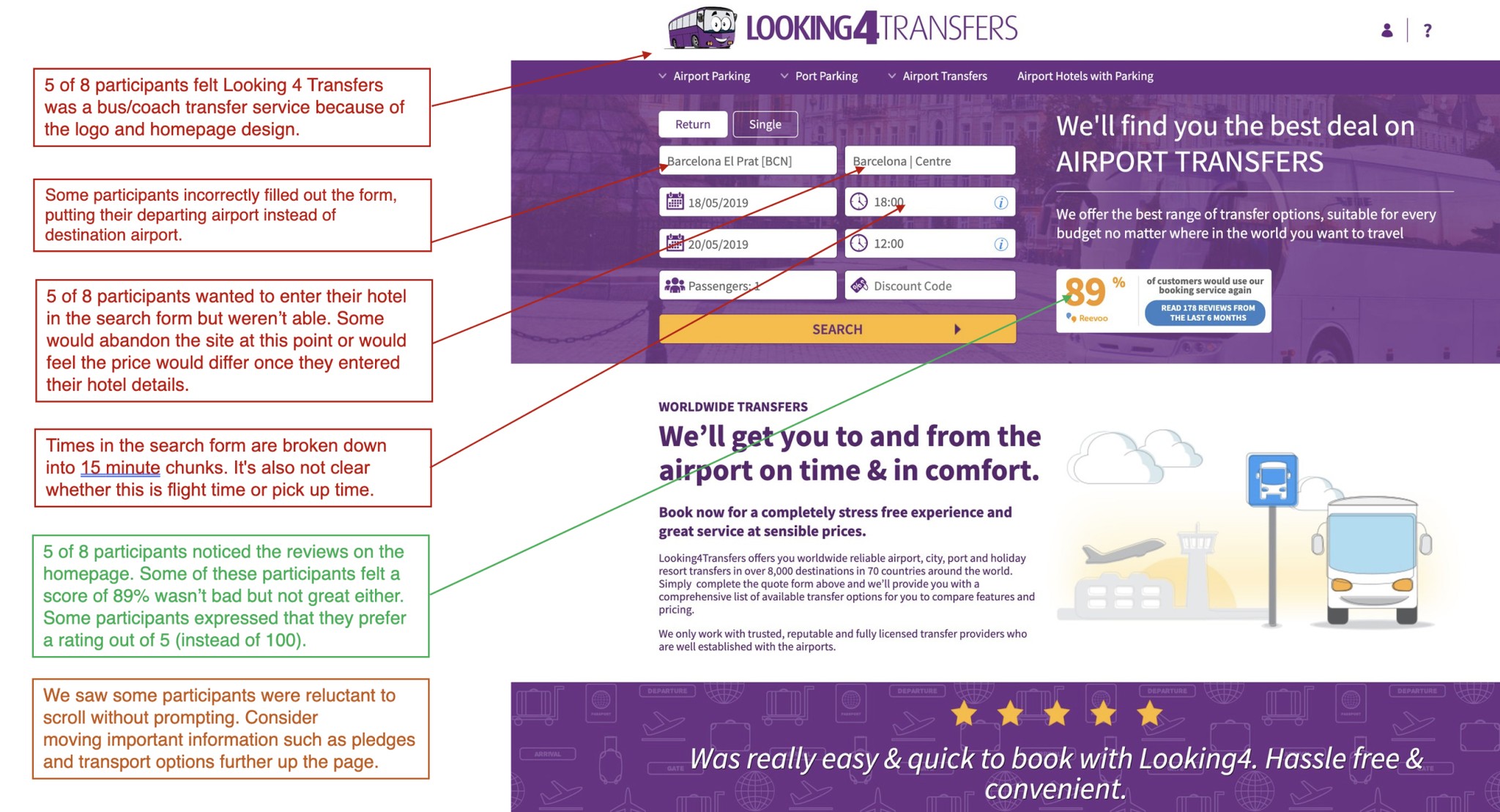
Testing the MVP and Refining the Search Journey
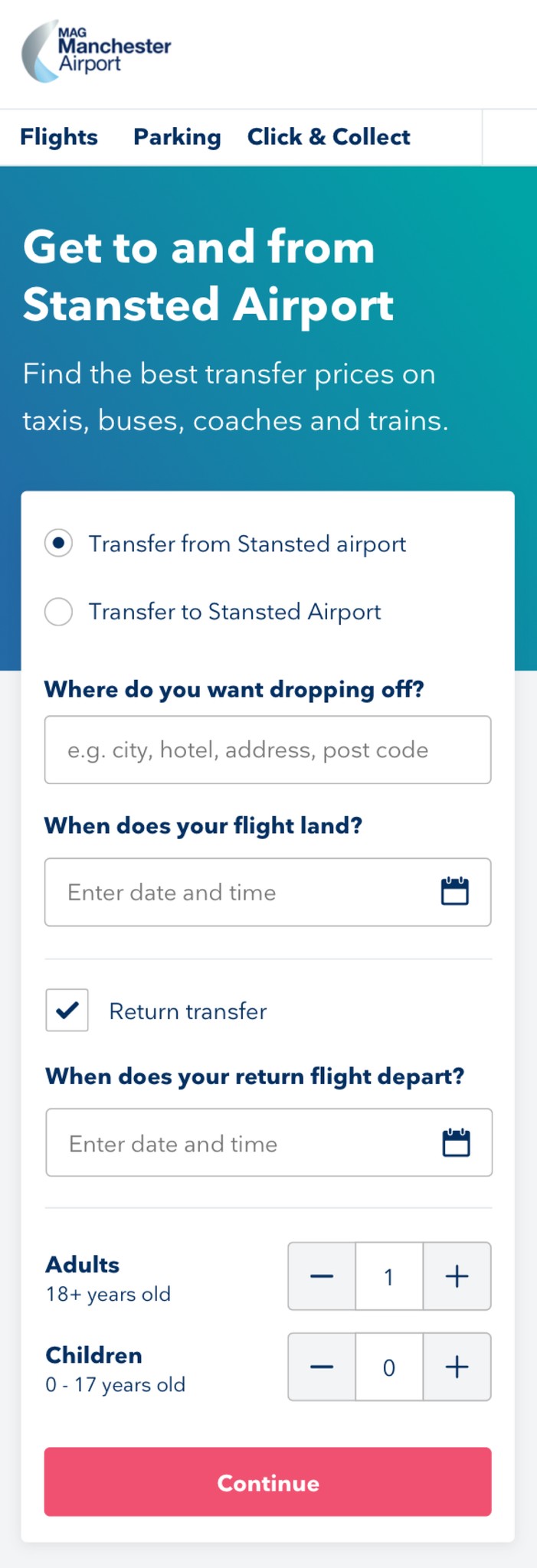
Refining the Search Experience
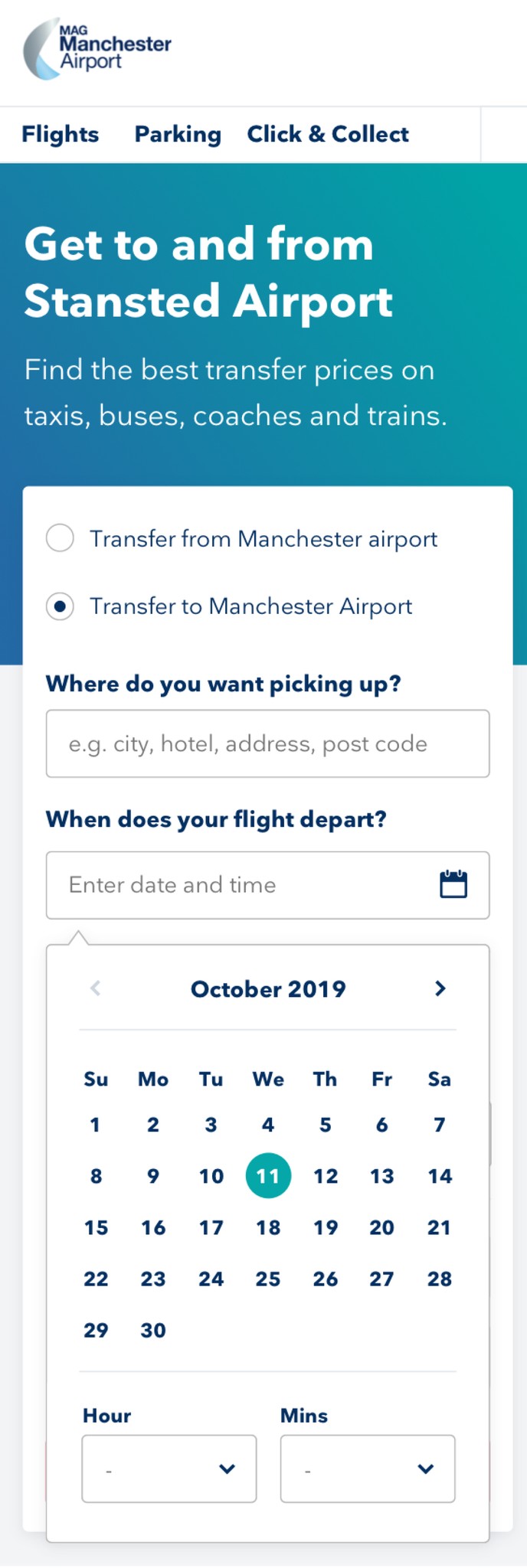
Based on insights from the usability testing, we iterated on the prototype by making new assumptions and implementing key design changes to improve the search journey.
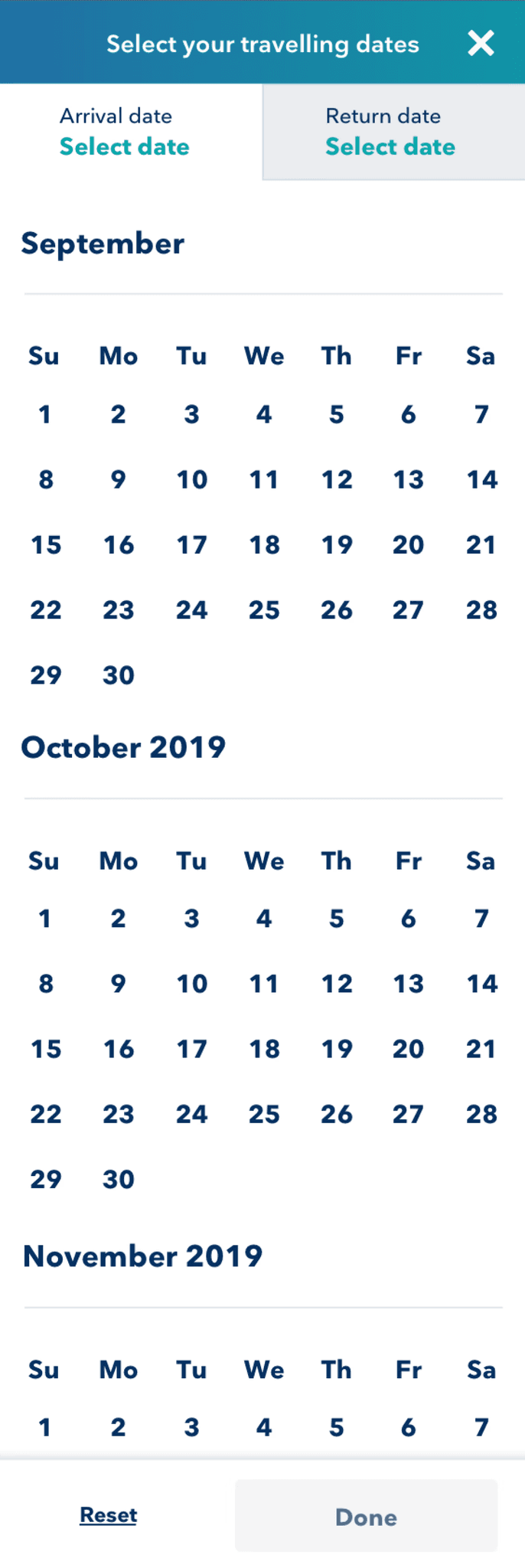
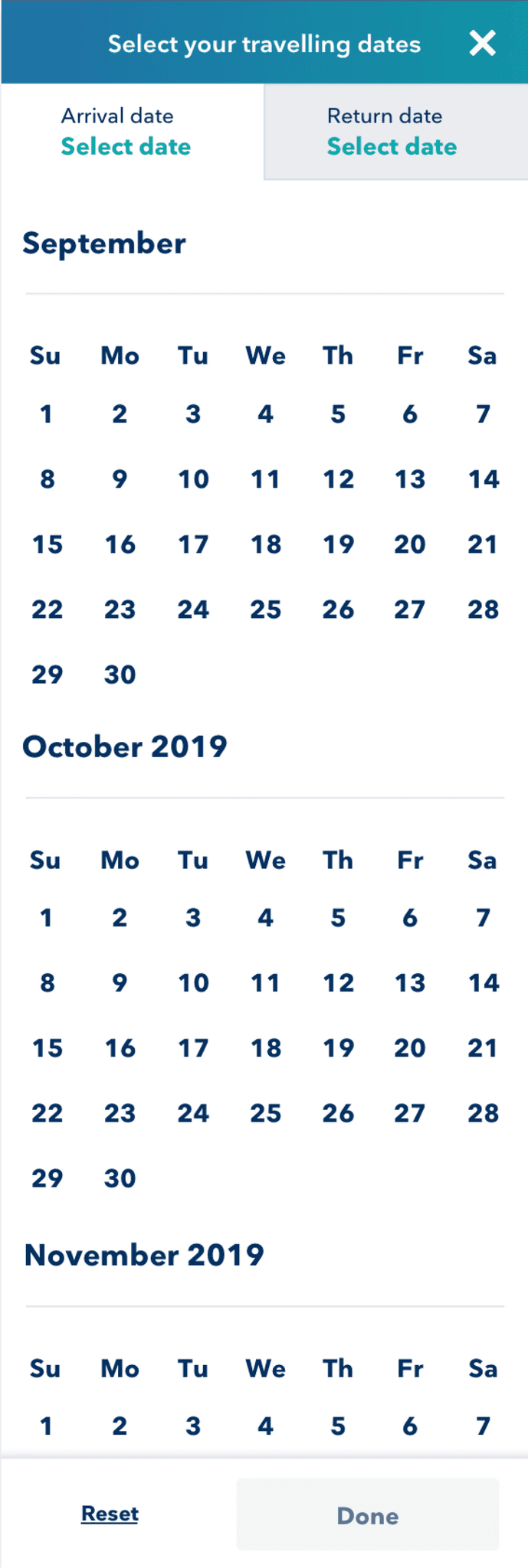
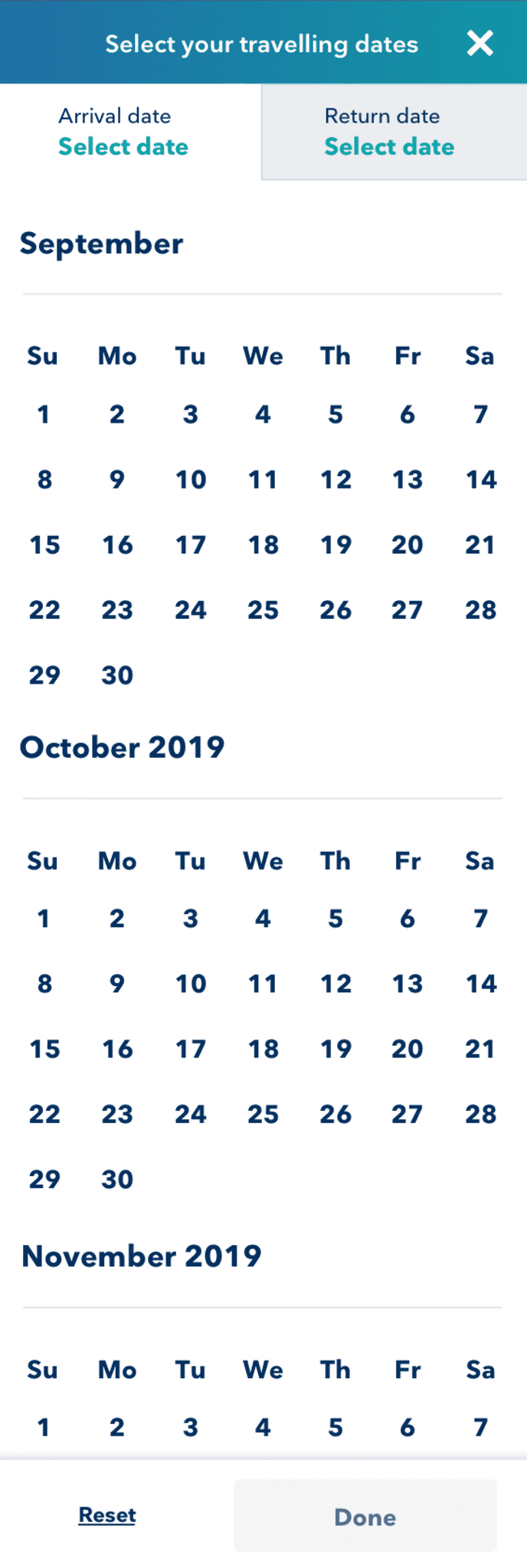
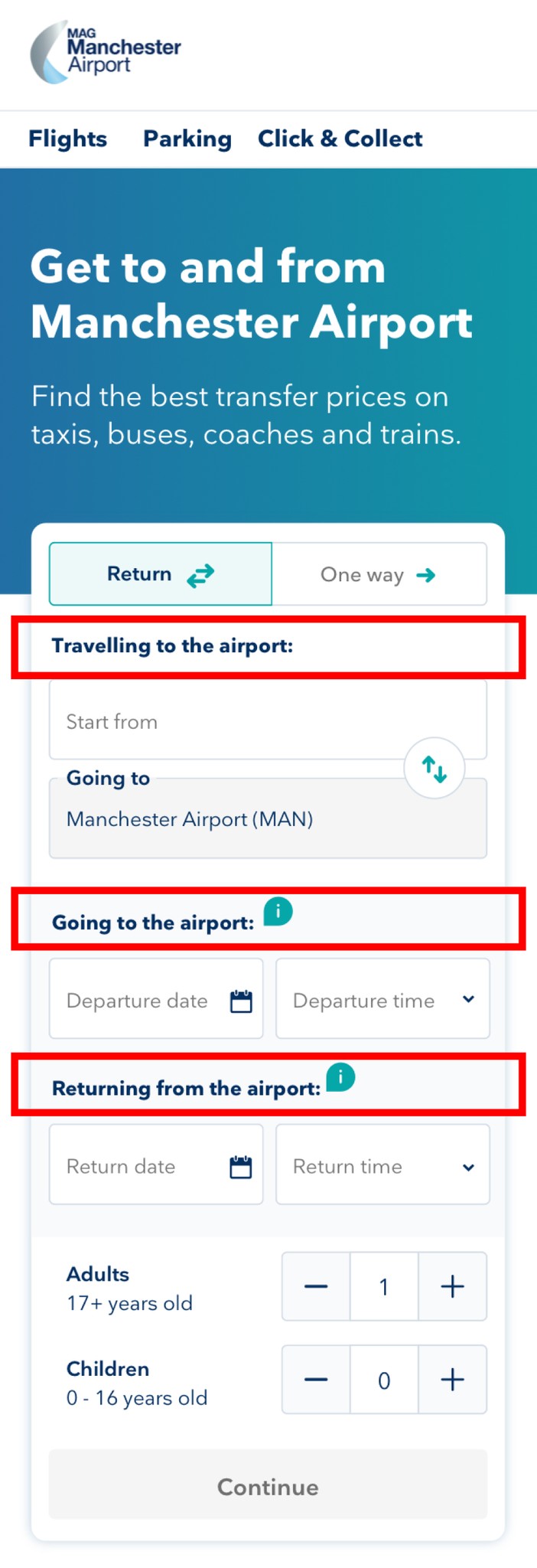
We separated the date and time picker, allowing users to focus on one task at a time for greater clarity.
The calendar was redesigned as a full-page overlay with “Done” and “Reset” buttons, a familiar pattern in the travel industry that promotes focus and usability.
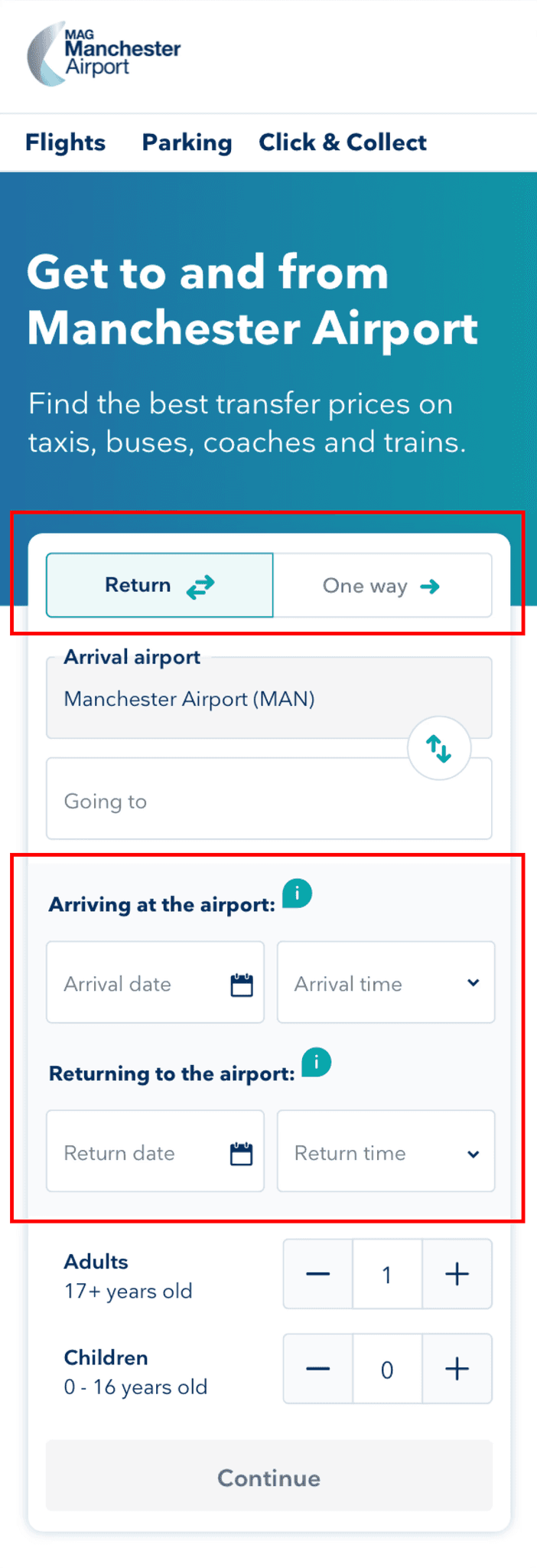
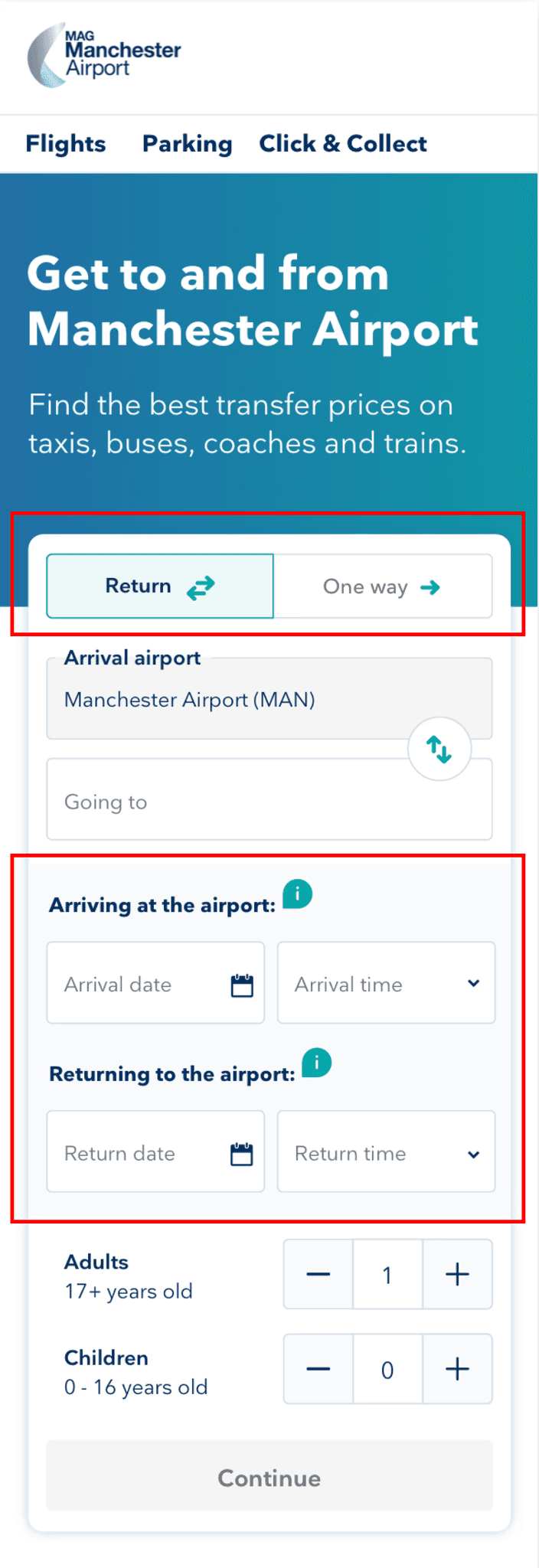
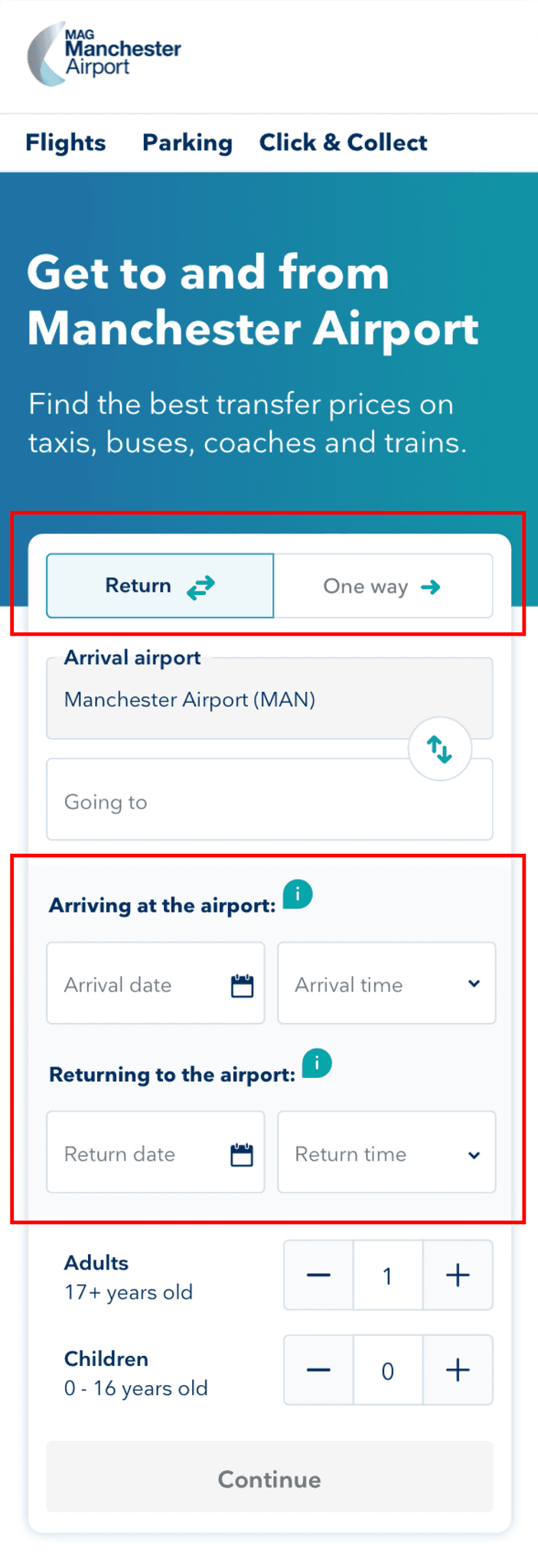
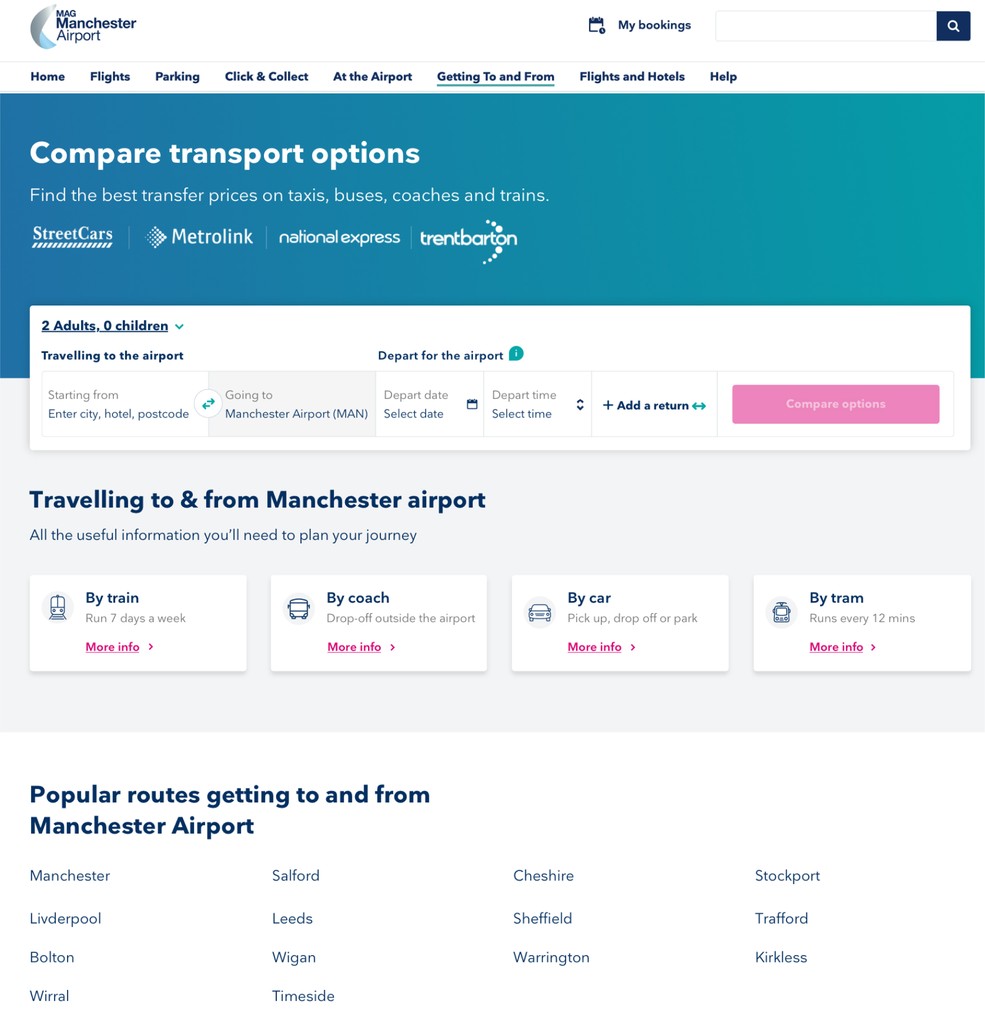
To address confusion around return journeys, we made the return toggle more prominent by placing it at the top of the search form, ensuring it was the first element users interacted with during their search.
These refinements aimed to simplify the search process and align the design with user expectations, creating a more intuitive experience.
Validating Assumptions Through Guerrilla Testing
To validate our new design assumptions, we conducted guerrilla testing at the airport’s train and coach station.
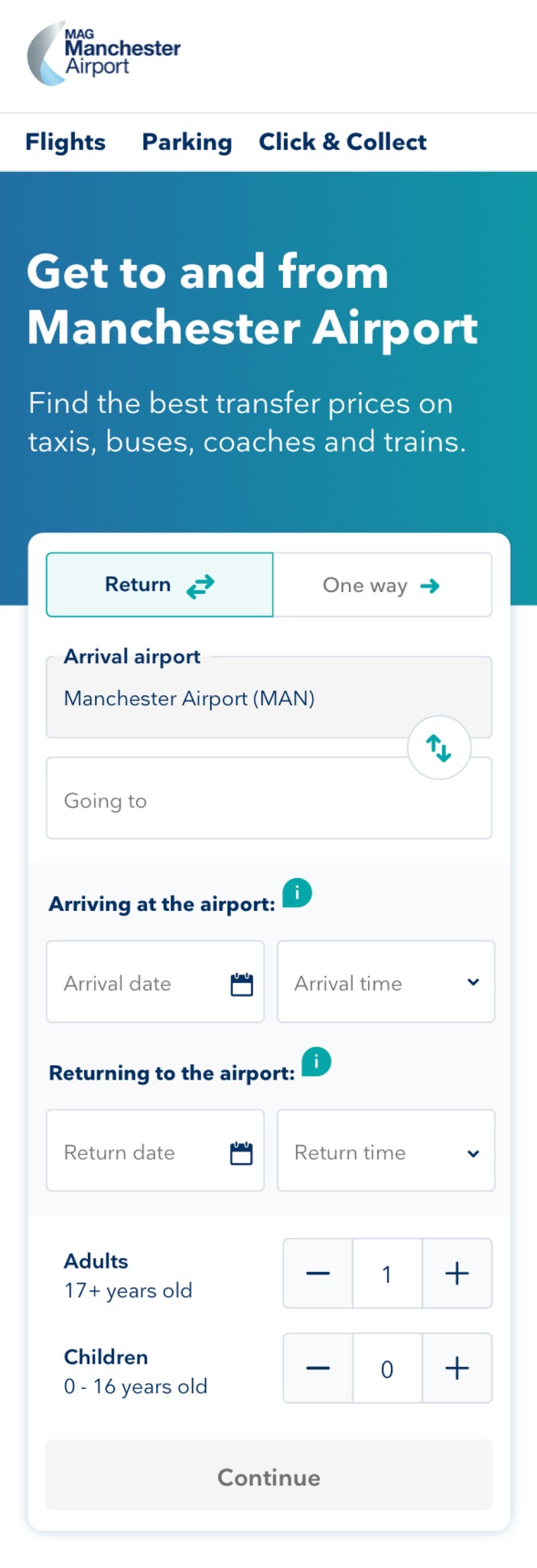
While the updated prototype addressed some usability issues, participants still expressed confusion over the language used in the “arrival airport” and “going to” fields, with a few participants booking incorrect journeys as a result.
To resolve this, we collaborated with a UX writer to refine the language, amending the designs to ensure clarity and reduce booking errors.
Testing the MVP to Define Next Steps
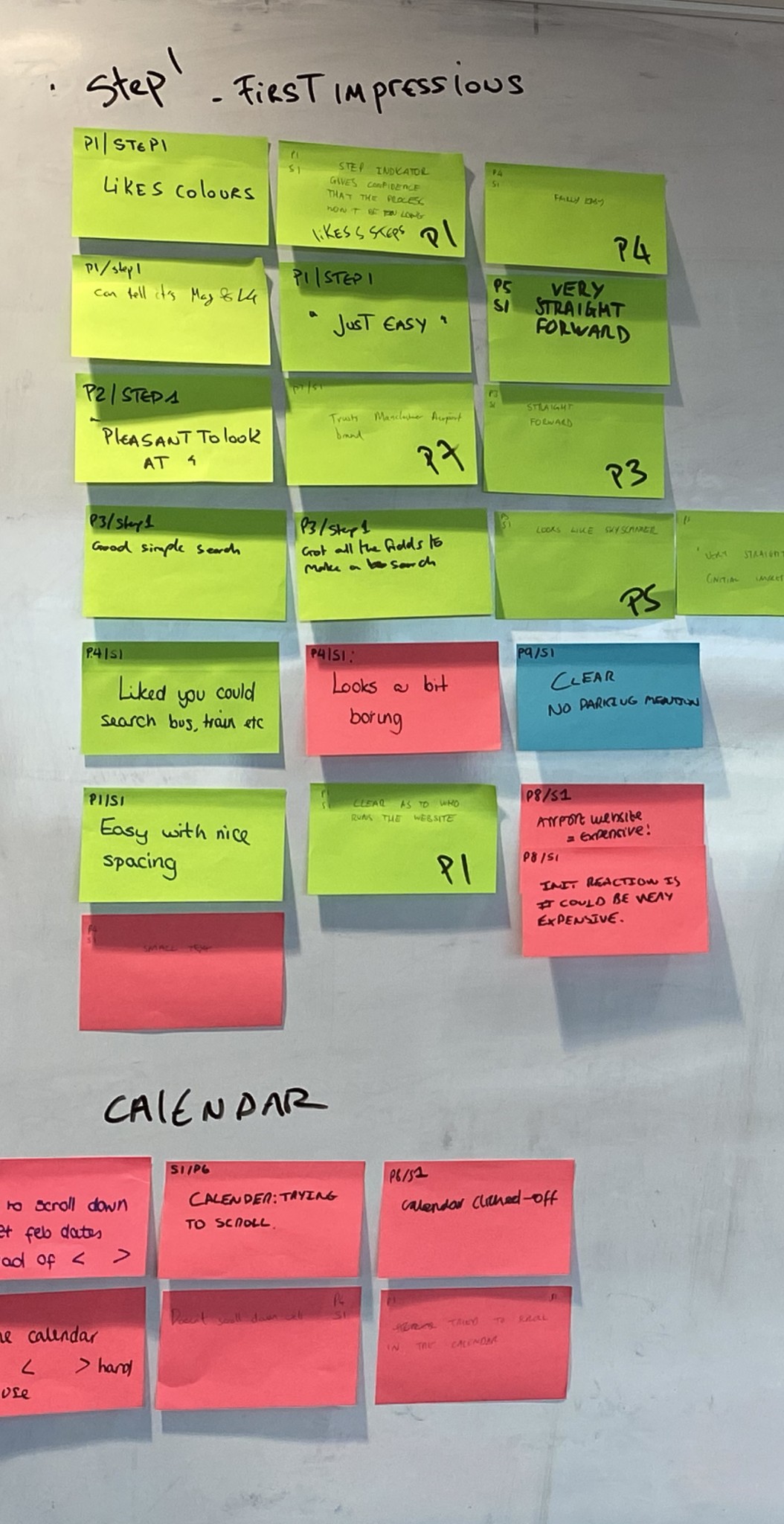
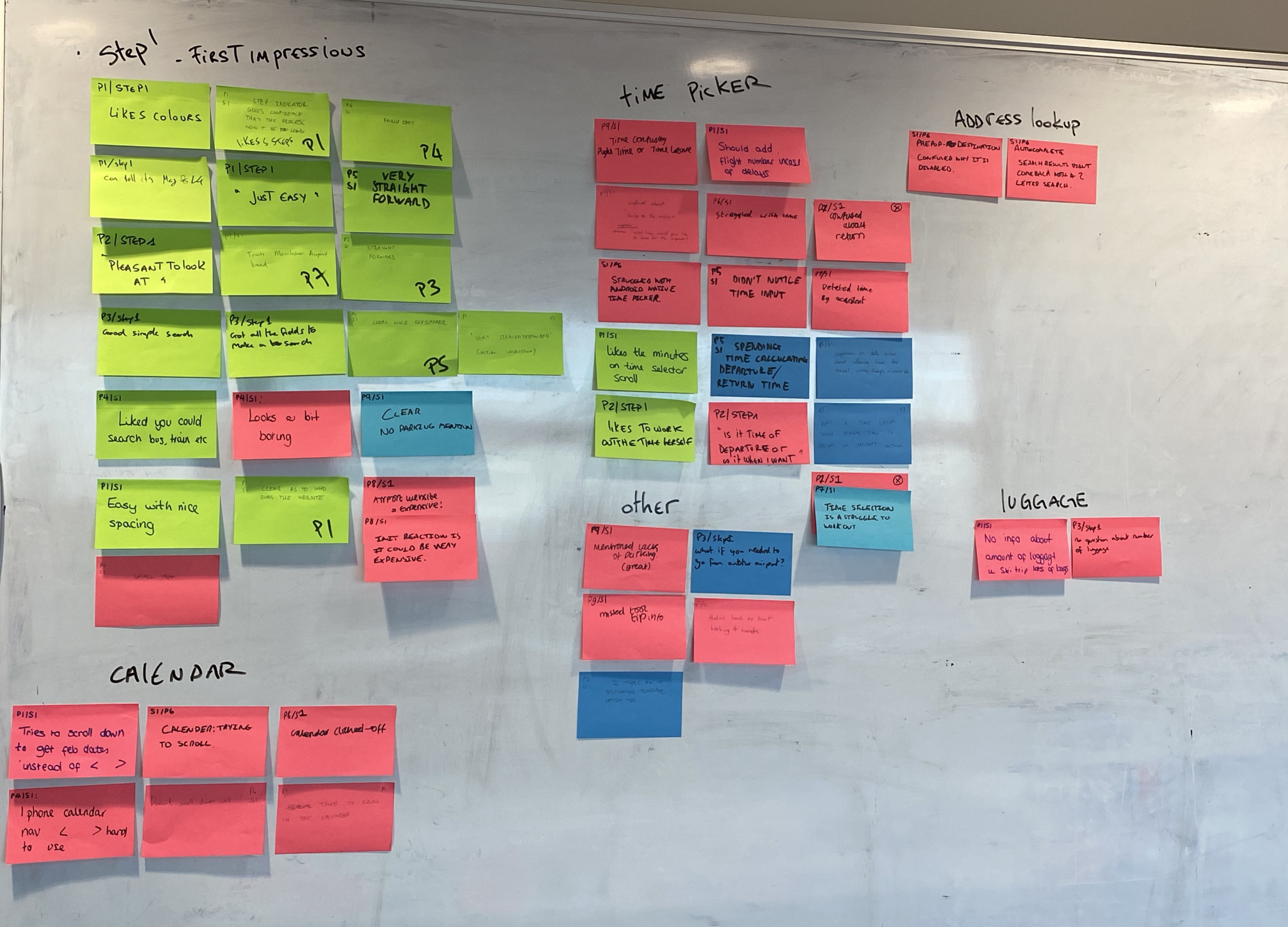
To determine the next priorities and iterations for the MVP, we adopted a data-driven approach. We analysed Hotjar recordings and Google Analytics data to uncover user behaviour patterns and identify pain points.
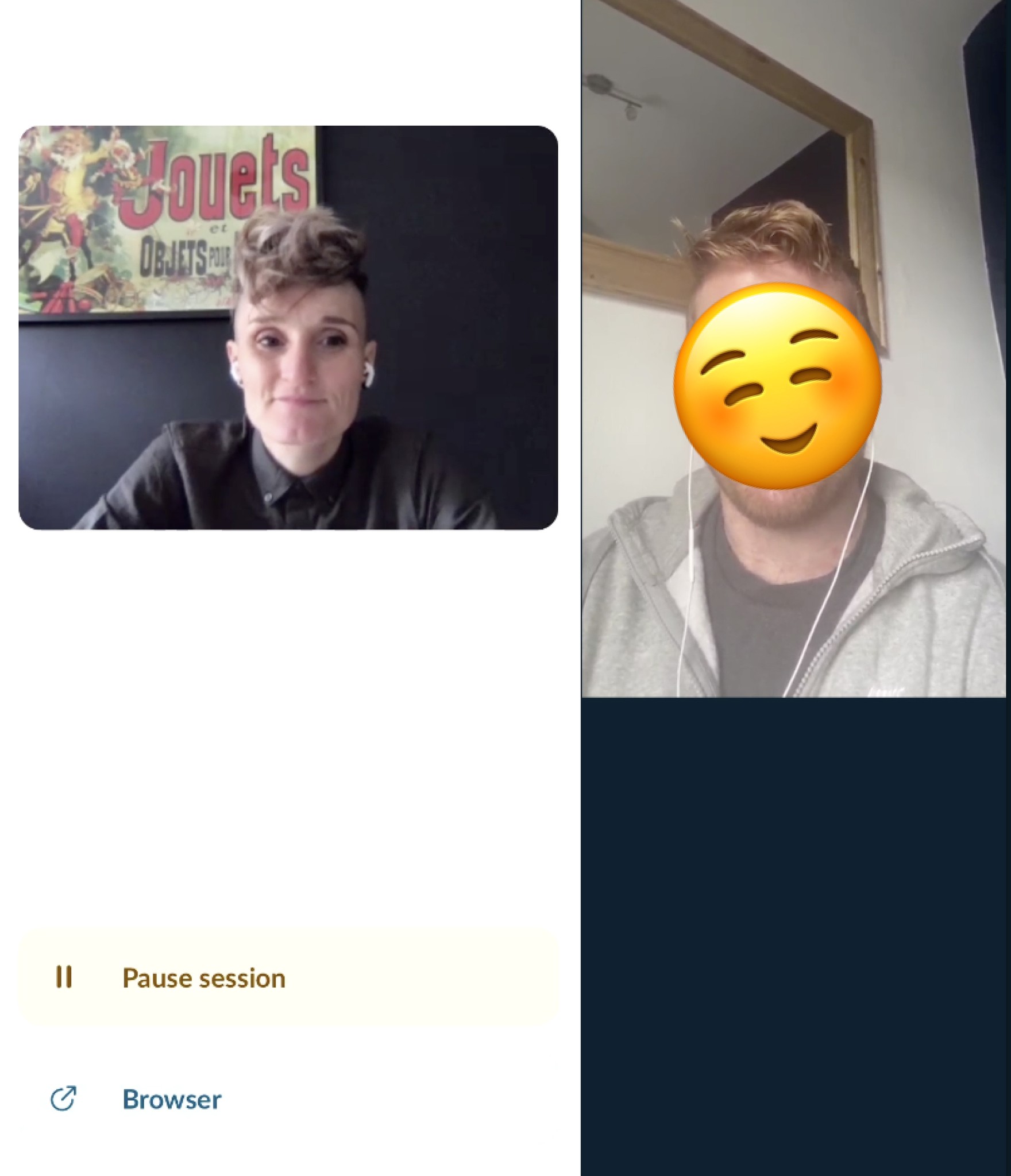
Additionally, we conducted usability testing in our lab to gain deeper insights into the user experience. This comprehensive mix of qualitative and quantitative data informed our roadmap for refining the product further. We adopted a data-driven approach to determine the next priorities and iterations for the MVP.
Building an A/B Testing Backlog
After completing user testing, we brought the entire product team together for playback workshops and ideation sessions.
To establish a robust A/B testing backlog, we followed a structured, collaborative process. After user testing, we conducted playback sessions where the team wrote “How Might We” (HMW) statements to reframe problems into opportunities. Each team member presented their HMWs, which were then grouped into themes.
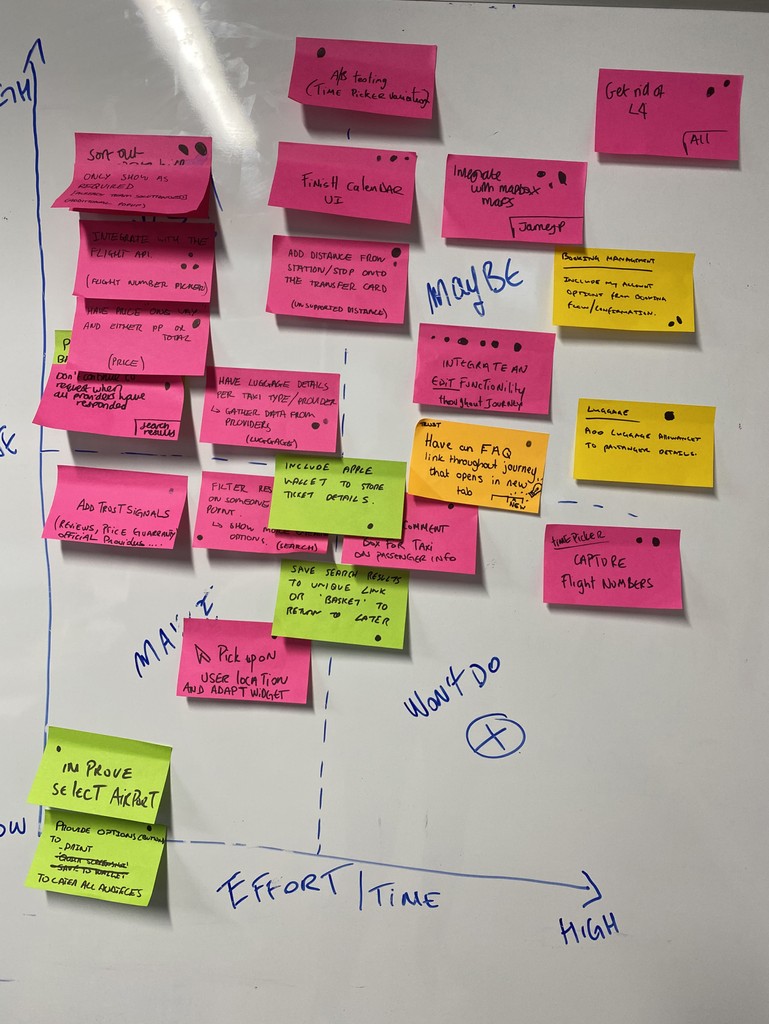
Then, the team brainstormed ideas, dot-voted on the most promising ones, and prioritised them using a value vs. effort graph. This approach ensured that our backlog was focused on high-impact opportunities and aligned with both user needs and business goals.
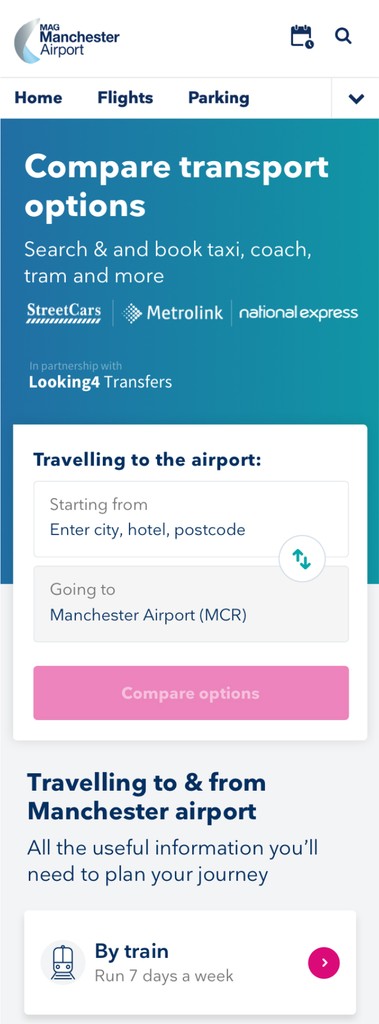
Final Home page widget

The results
We managed to run one A/B test on the transfer product before the COVID-19 lockdown, and it was a clear success.
However, as the pandemic unfolded, the company decided to redirect its focus towards its more established products, putting the transfer product work on hold. While the project was paused, the results of our test demonstrated the potential of the approach and provided valuable insights for future development.